Another edition of Classical:NEXT has come to an end. Once again, it offered inspiring presentations, insightful discussions, and impressive showcases—all against the backdrop of a sunlit, beautiful Budapest. However…
This year’s conference took place in Hungary just days before one of Europe’s most consequential elections in years. The country has drifted steadily toward authoritarianism—marked by widespread corruption, rising fascist tendencies, restrictions on LGBTQ+ rights, state control of the press, closed borders to refugees, and a growing estrangement from the European community. Most troubling has been Hungary’s alignment with Russia and obstruction of aid to Ukraine. Have we forgotten the Soviet invasion of 1956—when Ligeti fled this very city?
Walking through Budapest, we saw posters depicting Zelensky and Magyar as war criminals. Did the organizers not see the same streets, the same signs? Throughout Classical:NEXT, politics were astonishingly absent. Perhaps this was a deliberate choice—to keep art and politics apart. Yet to many of us, it felt like denial: a refusal to confront the world as it is. Silence does not dissolve reality, and sweeping it away solves nothing.
There were almost none Ukrainian delegates this year, and many nations—Germany among them—sent smaller contingents, likely in protest of the location. Planning such an event takes time, of course, and Budapest has much to offer. But when the world changes, so must we. It says something unsettling when the Eurovision Song Contest seems more politically aware than the classical music industry. It feels dissonant to speak of “open-mindedness” and European unity while war and oppression rage just beyond the door.
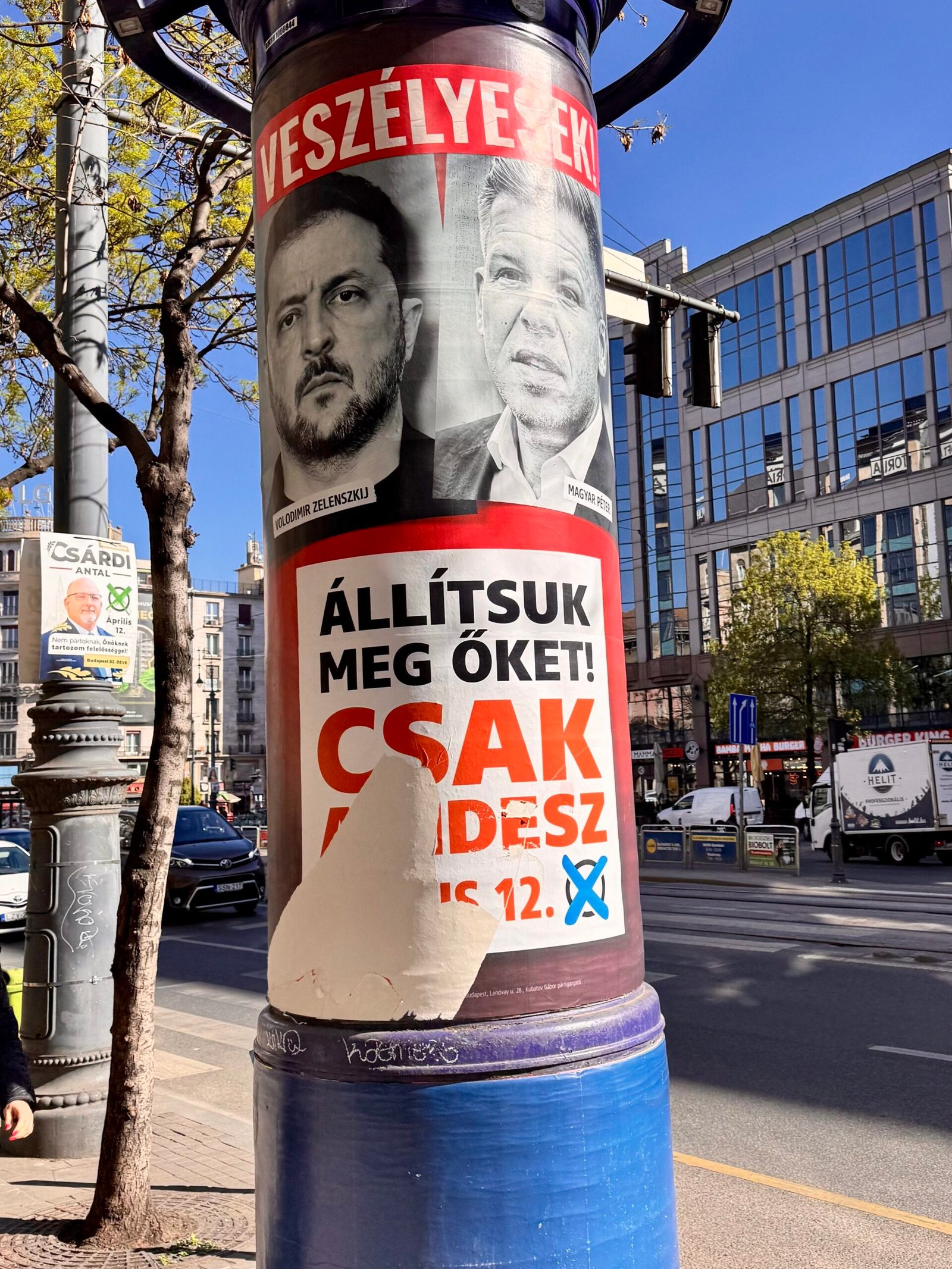 A picture of Volodymyr Zelenskyj and the Hungarian politician, Péter Magyar, with the decription «They are dangerous. Let us stop them».
Perhaps I am a lone delegate calling for greater political awareness within the classical field. Yet in countless conversations during the conference, I found I was not alone.Many share the view that Classical:NEXT must acknowledge how profoundly the political landscape shapes our art.
With Magyar now apparently victorious in the election, one can hope that Hungary may yet turn toward greater openness, closer ties with Europe, and renewed solidarity with Ukraine. If that happens, it will certainly affect the arts. And it is time—past time—for Classical:NEXT to open its eyes to that truth.
Anderz Døving
Managing Director, Klassisk, Norway